
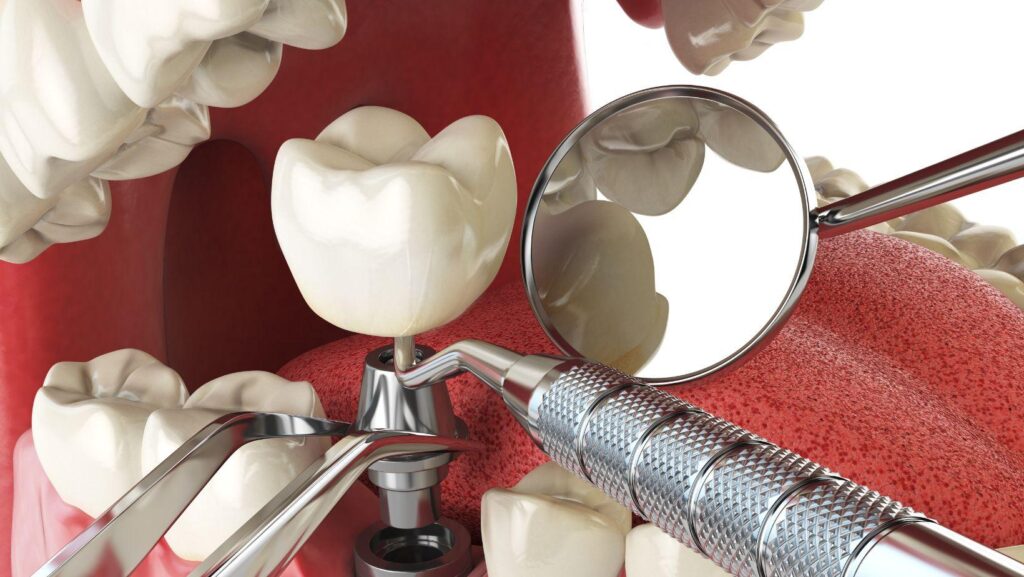
If you're thinking about a single tooth dental implant, here's the practical answer: you'll usually need about 6–8 mm of jawbone height and 8 mm of width, and the bone has to be dense enough so the implant can stay put and fuse securely. These numbers give you a solid place to start when talking with your dentist or implant specialist.
Your exact needs depend on the implant's size, where it's going in your mouth, and the quality of your jawbone. Let's dig into how bone structure affects implant success and what you can do if your bone's too thin or soft.
Bone Structure and Implant Success
Bone quality, height, and width all play a big role in how stable an implant feels, how long it takes to heal, and how well it holds up over time. You’ll need enough strong, well-positioned bone to support the implant’s length and diameter, and you definitely don’t want to risk hitting nearby nerves or sinuses.
Role of Jawbone Density
Jawbone density really matters. It determines how fast and securely your implant will fuse to the bone (that’s osseointegration, if you want the technical term). Dentists talk about density using categories like D1–D4 or Hounsfield units from CBCT scans. Higher numbers mean stronger, more stable bone.
If your bone is dense (D1–D2 or HU around 850–1250), implants get immediate stability and can sometimes be loaded sooner. Softer bone (D3–D4) can be tricky—it raises the risk of micromovement, so you might need longer healing, a wider or longer implant, or maybe extra steps like staged loading.
Your dentist might tweak the implant design—maybe go for a tapered or roughened surface—or use bone condensation or grafting to get better results. Pre-op imaging and density checks help guide these decisions.
Alveolar Ridge Anatomy
The alveolar ridge is where the action happens. It gives vertical and horizontal support for the implant. Ridge height sets the max implant length, while width controls the diameter and platform.
The thickness of the cortical plate and the shape of the ridge affect how stress is spread out. Thin buccal plates can lead to problems like dehiscence or gum recession. The back upper jaw (posterior maxilla) often has less bone height because of the sinus, and the lower back jaw (mandibular posterior) can be limited by the nerve.
You’ll need site-specific planning. Sometimes that means a sinus lift in the upper back, nerve mapping in the lower jaw, or ridge augmentation if the crest is too thin.
Importance of Bone Volume
Bone volume means you’ve got enough height and width for predictable implant placement. Clinicians often aim for at least 8–10 mm of vertical height and 6–8 mm of horizontal width, but this can vary depending on the implant system and where it’s going.
If you don’t have enough bone, you might end up with shorter or narrower implants, angled placements, or prosthetic compromises. That can lead to more stress and possibly a higher risk of failure.
Surgeons can use ridge augmentation, guided bone regeneration, or sinus lifts to add volume. The method depends on the defect size, healing time, and your prosthetic goals.
Factors Influencing Bone Requirements
Implant design, surgical technique, and your jaw’s anatomy all affect how much bone you’ll need. These factors set the minimum height, width, and density needed for a stable, long-lasting implant.
Implant Size and Type
Implant size changes the bone requirements. Most standard implants are 3.5–5.0 mm in diameter and 8–13 mm long. Narrower or shorter implants need less bone but might not handle as much stress over time.
Wide implants need more width, while short ones still need enough vertical bone. Sometimes, if the sinus or nerve is in the way, your dentist will choose a shorter implant.
Your dentist will pick the implant design—tapered, threaded, or blade—based on your bone quality. Threaded, tapered implants tend to work better in softer bone. If your bone’s not dense, your dentist might go for a wider or longer implant, or use surface-treated ones to help them fuse faster.
Prosthetic needs matter too. Single crowns, bridges, and full-arch prostheses all put different forces on the implant. The size has to match the load to prevent overload and bone loss.
Talk about implant size and type with your surgeon. Make sure you understand the trade-offs and how they’ll affect the surgery and your long-term results.
Location in the Jaw
Where the implant goes changes everything. The upper back jaw (posterior maxilla) usually has thinner bone and sits close to the sinus, so you might need a sinus lift or shorter implant there. The front upper jaw needs enough buccal bone for looks and a good emergence profile.
The lower back jaw (posterior mandible) usually has denser bone, but there’s not always enough height because of the nerve. Sometimes, shorter implants or even nerve repositioning are needed, though that’s rare.
You’ll generally need at least 6–8 mm of width to fit a standard implant, plus 1–2 mm of bone on each side for blood supply. Height depends on the space between the crest and the sinus or nerve. Dentists use CBCT scans to measure and plan.
If your bone isn’t thick enough, your dentist might suggest grafting—like ridge augmentation, sinus lifts, or onlay grafts—to make space for the implant.
Age-Related Considerations
Age affects bone volume and healing. Older adults often have less dense bone and heal a bit slower, which can make implants less stable at first and stretch out the healing.
Osteoporosis can thin the bone, especially in the upper back jaw, so it’s important to get good imaging and check density.
Younger adults usually have enough bone, but if you’re still growing (late teens), your dentist needs to check that growth is done. Growth can shift implant position, especially in the front.
Certain meds, like bisphosphonates or antiresorptives, can affect healing and raise the risk of complications. Always share your medical history and medications so your dentist can plan accordingly or recommend grafting if needed.
Options for Insufficient Bone
If your jawbone’s too thin or soft, you’ve got options. Surgeons can rebuild bone with grafts, use synthetic materials, or try barrier-guided techniques. Each method has its own healing time, donor source, and expected bone gain.
Bone Grafting Procedures
Bone grafting adds bone to the implant site to boost height, width, or volume. Surgeons might use bone from your chin, jaw, hip, or use processed donor bone. Your own bone (autograft) heals fastest and doesn’t risk disease, but donor bone skips the second surgery.
Healing usually takes a few months—expect 3–6 months before the implant goes in. Block grafts work for big defects, while particulate grafts handle smaller jobs.
There are risks, like infection, graft loss, or temporary nerve irritation. Your dentist will go over these and schedule follow-up scans to check progress.
Use of Synthetic Materials
Synthetic grafts give you an alternative if you’d rather avoid a donor site. These include bioactive ceramics like hydroxyapatite or beta-tricalcium phosphate, and sometimes blends that help new bone grow. They all have different resorption rates and bone-forming properties. Some mixes include growth factors to speed things up.
You’ll probably have less pain and a quicker surgery than with autografts. Healing still takes months, though. Dentists often mix synthetics with your own bone or platelet-rich fibrin to boost results.
Ask your dentist about long-term stability and whether your bone defect is right for a synthetic-only approach.
Guided Bone Regeneration
Guided bone regeneration (GBR) uses a barrier membrane to protect graft material and keep soft tissue cells out while bone grows back. Membranes come in two main types: resorbable (like collagen) and non-resorbable (such as PTFE).
Your surgeon will pick one depending on the size of the defect and whether you’ll need a second procedure to remove it. GBR often works best for localized ridge defects and sometimes for placing implants at the same time, but it’s not always a one-size-fits-all solution.
The technique needs really precise membrane placement. Surgeons also aim for tension-free soft-tissue closure, since exposure can mess things up fast.
Most of the time, GBR gets paired with particulate grafts or growth factors, just to boost the results a bit. You’ll need regular check-ups and imaging to see how things are healing.
If the membrane gets exposed or infected, your surgeon might need to step in. But when everything goes right, GBR can give you the bone volume you need for solid, stable implants.